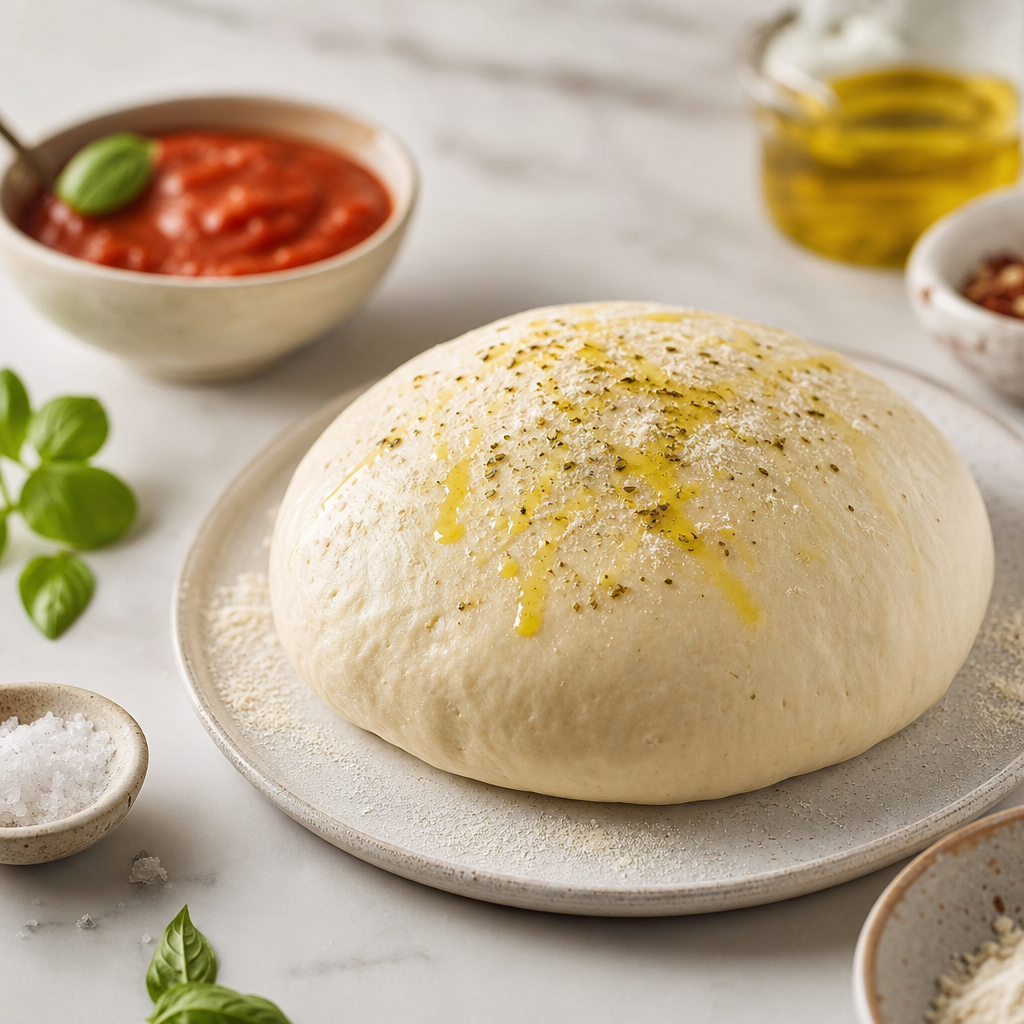
Homemade Pizza Dough
A springy, slightly blistered crust with a tender crumb and crisp rim makes every homemade pie feel special. This dough yields a flexible base that stretches thin without tearing, browning beautifully in a hot oven or on a pizza stone. The recipe supports both same-day and slow cold-ferment methods to deepen flavor and texture.
For quicker results use the same-day method, or refrigerate the dough for 18–48 hours to develop a nutty, mildly tangy flavor and better oven rise. Use bread flour for extra chew, or a mix of all-purpose and high-gluten flour if you prefer a lighter crust. If you need a gluten-free version, substitute a certified gluten-free flour blend and add a binding egg or xanthan gum per the blend’s recommendations.
Serve as a weeknight dinner station—top with classic tomato and mozzarella, roasted vegetables, or quick-cooked sausage. Make extra dough balls to freeze for up to 3 months; thaw overnight in the fridge before using. This dough also works for focaccia, calzones, or garlic rolls when adjusted slightly for thickness and bake time.
Before You Start
How to Make It
-
1
Activate the yeast
Combine the water and sugar in a large mixing bowl, sprinkle the yeast over the surface, and let sit 5–10 minutes until foamy. If the yeast doesn't foam, discard and start with fresh yeast.
-
2
Add the wet ingredients
Add the foamy yeast mixture and olive oil to the flour-and-salt mixture.
-
3
Form the shaggy dough
Stir with a wooden spoon or dough scraper until a shaggy dough forms and most of the dry flour is incorporated, about 1–2 minutes.
-
4
Knead the dough
Turn the dough out onto a lightly floured surface and knead for 8–10 minutes until smooth and elastic, or use a stand mixer with a dough hook on medium speed for 6–8 minutes.
-
5
Rise the dough
Place the dough in a lightly oiled bowl, turning once to coat. For same-day use: cover and let rise at room temperature until doubled, about 1–1½ hours. For cold ferment: cover tightly and refrigerate for 18–48 hours.
-
6
Divide the dough
After the first rise, divide the dough into 3 or 4 equal portions (about 220–300 g each depending on thickness preference). Gently shape each portion into a tight ball by stretching the surface and tucking the edges underneath.
-
7
Rest the dough balls
If using immediately, let the dough balls rest at room temperature for 30–60 minutes (covered) to relax the gluten before shaping. If refrigerating, keep the dough balls covered; bring them to room temperature for 45–60 minutes before shaping.
-
8
Prepare the baking setup
Use the preheated pizza stone or steel, which should have heated for at least 45 minutes. For sheet-pan pizzas, use the lightly oiled pan and preheat the oven slightly lower if needed.
-
9
Shape each dough ball
On a lightly floured surface, press each dough ball from center outward with fingertips, leaving a 1–2 cm rim. Stretch by hand or drape over knuckles to avoid tearing until the dough reaches the desired diameter.
-
10
Top and bake the pizza
Top the shaped dough sparingly (too much sauce or cheese prevents a crisp crust). Slide the pizza onto the preheated stone or bake it on the sheet pan. Bake 8–12 minutes until the rim is golden and the base is blistered.
-
11
Rest and serve
Remove the pizza from the oven, rest 1–2 minutes, slice, and serve. Cool any leftover baked pizza on a rack to keep the crust crisp.
Still hungry? Try one of these
Chicken Milanese
Crispy pan-fried chicken cutlets with a bright lemon-arugula salad — perfect for weeknight dinners or light weekend meals in 30 minutes.