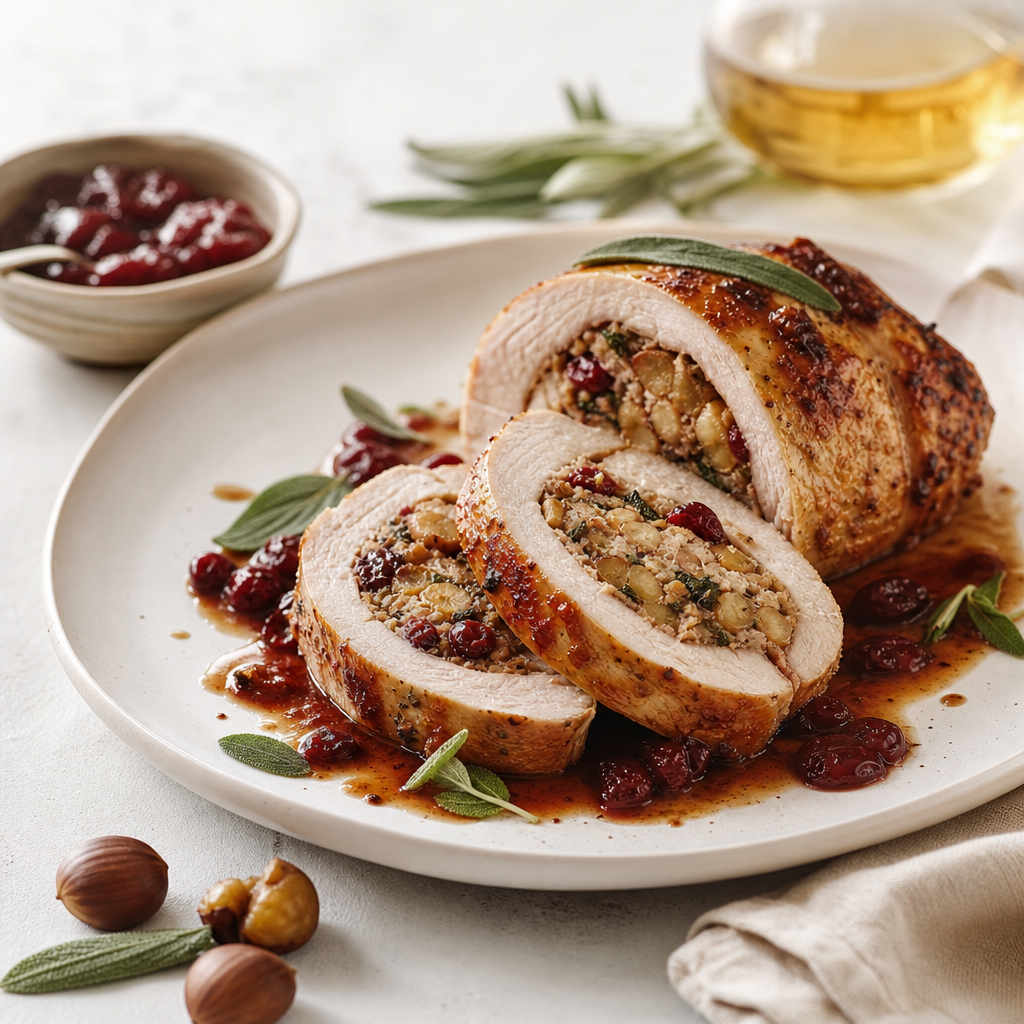
Pork Tenderloin Roulade with Chestnut and Sage Filling
Silky slices of pork reveal a moist, tender filling studded with buttery chestnuts, bright dried cranberries, crisp breadcrumbs and fragrant sage—an attractive centerpiece with contrasting textures and a glossy fruit-forward pan sauce. The roulade browns to a caramelized exterior while remaining juicy inside, then finishes with a tart-sweet cranberry‑cider reduction that ties the autumn flavors together.
Swap-ins are easy: use rotisserie chicken or turkey breast slices for a lighter option, substitute pistachios or toasted pecans for chestnuts if unavailable, or trade dried cranberries for cherries or apricots for different fruit notes. For quicker prep, buy pre-cooked vacuum-packed chestnuts and pre-made seasoned breadcrumbs; for a nuttier filling, fold in grated Pecorino or Parmesan.
Serve this roulade sliced for Thanksgiving, a November dinner party, or a small holiday gathering alongside roasted root vegetables, creamy mashed potatoes, or a jewel-toned winter salad. Make-ahead tips include assembling and chilling the roulade up to 24 hours before roasting, then bring to room temperature and roast as directed for even cooking.
How to Make It
-
1
Preheat the oven to 200°C (400°F). Line a baking sheet with parchment and set a rack on top if available.
-
2
Butterfly each pork tenderloin: lay flat and slice lengthwise almost through, then open like a book and press between plastic wrap to an even 1–1.5 cm thickness.
-
3
Season the flattened pork on both sides with 1 tsp salt and 1/2 tsp pepper.
-
4
Pulse the cooked chestnuts in a food processor until coarse (small chunks remain). Transfer to a bowl and stir in breadcrumbs, ricotta, dried cranberries, chopped sage (reserve a few leaves), minced garlic, lemon zest, 1 tbsp olive oil, and the remaining 1 tsp salt and 1/2 tsp pepper until a spreadable mixture forms.
-
5
Spread the filling evenly over each pork piece, leaving a 2 cm border. If using prosciutto, lay slices over the filling. Roll each tenderloin tightly from the long side into a roulade and secure with kitchen twine every 3–4 cm.
-
6
Heat a large ovenproof skillet over medium-high heat and add 1 tbsp olive oil and 1 tbsp butter. Sear the roulades on all sides until golden, about 2–3 minutes per side.
-
7
Transfer the skillet to the oven and roast until the internal temperature reaches 63°C (145°F), about 18–25 minutes depending on thickness. Remove roulades to a cutting board, tent with foil, and rest 10 minutes (carryover will bring temp to safe level).
-
8
While the meat rests, make the pan sauce: place skillet over medium heat, add apple cider and chicken stock, scraping browned bits. Stir in cranberry sauce and red wine vinegar, bring to a gentle simmer and reduce until slightly thickened, about 6–8 minutes. Finish with 1 tbsp butter and the reserved chopped sage leaves, swirling until glossy. Taste and adjust seasoning.
-
9
Slice the rested roulades into 2–3 cm rounds. Arrange slices on a platter or plates, spoon the cranberry-cider sauce over and garnish with extra sage if desired.
-
10
Store leftovers chilled in an airtight container up to 3 days. Reheat gently in a low oven with a splash of stock to avoid drying.
Still hungry? Try one of these
Stovetop Beef Chili with Beans
Hearty stovetop beef chili with browned beef, tomatoes, beans, and warm spices—one-pot weeknight dinner that simmers to deepen flavors.