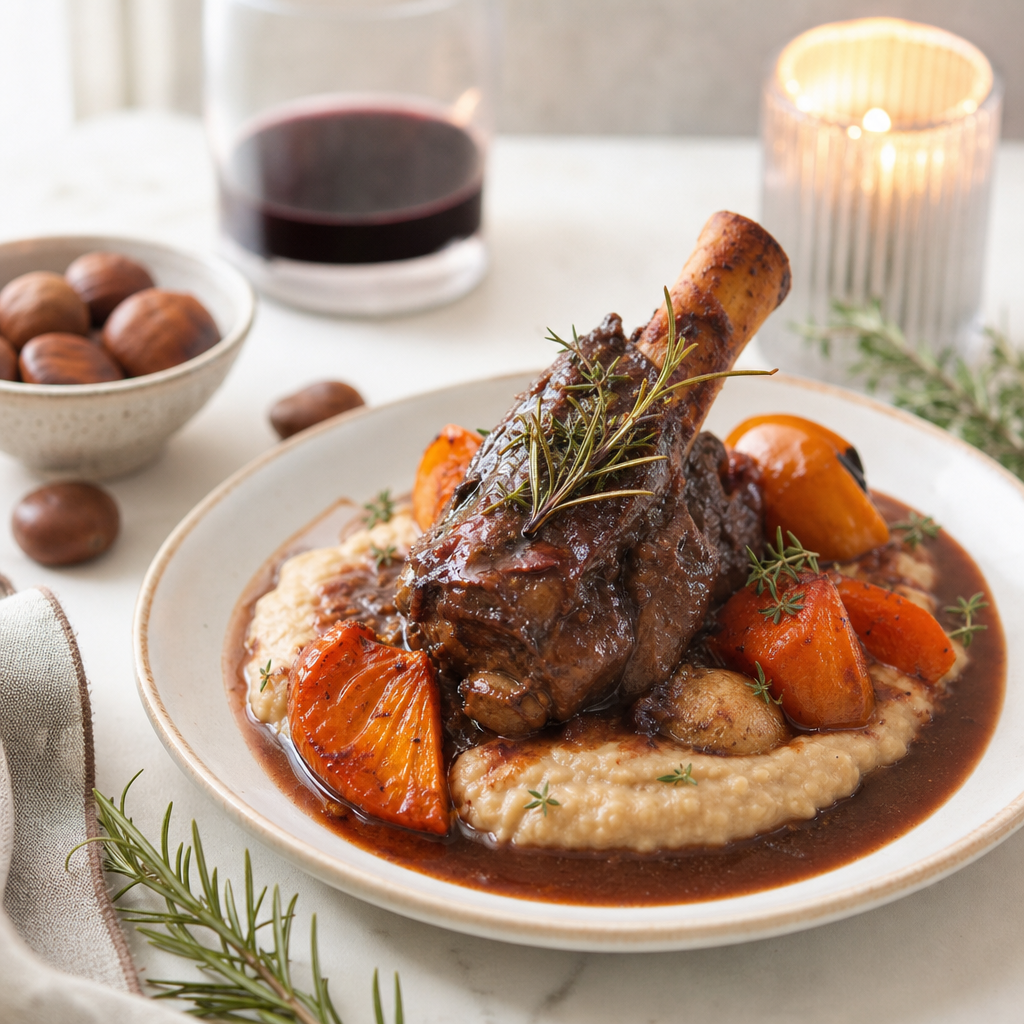
Red Wine-Braised Lamb Shanks with Roasted Persimmons and Chestnut Purée
Silky, fall-off-the-bone lamb shanks bathed in a glossy red-wine and tomato braising liquid, finished with roasted winter persimmons that add bright, honeyed sweetness and jewel-like color to the pan. The dish pairs the meat’s rich, gelatinous texture with a smooth chestnut purée—luscious, slightly sweet, and nutty—which frames each bite.
Swap or boost aromatics depending on the pantry: use shallots instead of onion, or substitute canned chestnuts for fresh roasted chestnuts if fresh are hard to find in winter markets. For a deeper glaze, reduce some of the braising liquid separately and whisk in a knob of butter. A slow cooker can be used for the braise—brown the shanks first, then transfer to the slow cooker to finish on low for 6–7 hours.
Serve this as a centerpiece for a December holiday meal, pairing with braised red cabbage, creamy root-vegetable mash, or buttered egg noodles. Leftovers reheat well; store meat and purée separately and rewarm gently to preserve texture. This makes an elegant main for dinner parties but is approachable enough for a special family Sunday supper.
How to Make It
-
1
Preheat the oven to 325°F (160°C). Pat the lamb shanks dry and season generously with salt and pepper.
-
2
Heat 2 tbsp olive oil in a wide Dutch oven over medium-high heat. Brown the shanks in batches, 6–8 minutes per side, until deeply golden. Transfer browned shanks to a plate.
-
3
Reduce heat to medium and add the remaining 1 tbsp olive oil. Add the onion, carrot, and celery and cook, stirring occasionally, until softened and starting to brown, about 8 minutes.
-
4
Add the garlic and tomato paste and cook, stirring, 1–2 minutes until fragrant and the paste darkens slightly.
-
5
Pour in the red wine and scrape up brown bits from the bottom of the pot. Simmer until the wine reduces by about half, 6–8 minutes.
-
6
Return the lamb shanks to the pot. Add the beef stock, thyme, rosemary, and bay leaves so the liquid comes about two-thirds up the shanks. Bring to a gentle simmer.
-
7
Cover the Dutch oven and transfer to the preheated oven. Braise until the meat is very tender and pulls away easily from the bone, 2 to 2 1/2 hours.
-
8
While the shanks braise, roast the persimmons. Halve the persimmons, toss with 1 tsp olive oil and 1 tsp honey, and roast on a baking sheet at 400°F (200°C) until caramelized at the edges, 18–22 minutes. Set aside.
-
9
Prepare the chestnut purée: warm the roasted chestnuts with the butter and heavy cream in a small saucepan over low heat until soft and heated through, 6–8 minutes. Transfer to a blender or use an immersion blender and puree until very smooth. Season with 1/2 tsp salt and taste; adjust with more salt or a splash of cream if needed.
-
10
When the shanks are done, transfer them to a serving platter and tent with foil. Skim fat from the surface of the braising liquid and discard the herbs. Optionally, reduce the braising liquid on the stovetop over medium-high heat until slightly thickened (5–8 minutes) and whisk in 1 tsp honey to balance acidity.
-
11
Spoon a smear of chestnut purée onto each plate, set a lamb shank on top, and ladle the reduced braising sauce around it. Arrange roasted persimmons alongside and drizzle any pan juices over the fruit and meat. Garnish with a few fresh thyme leaves and serve immediately.
Still hungry? Try one of these
Cranberry Ricotta Crostini with Honeyed Pistachios and Orange Zest
Festive baked crostini topped with creamy ricotta, tart roasted cranberries, honeyed pistachios, and bright orange — perfect Christmas appetizers.