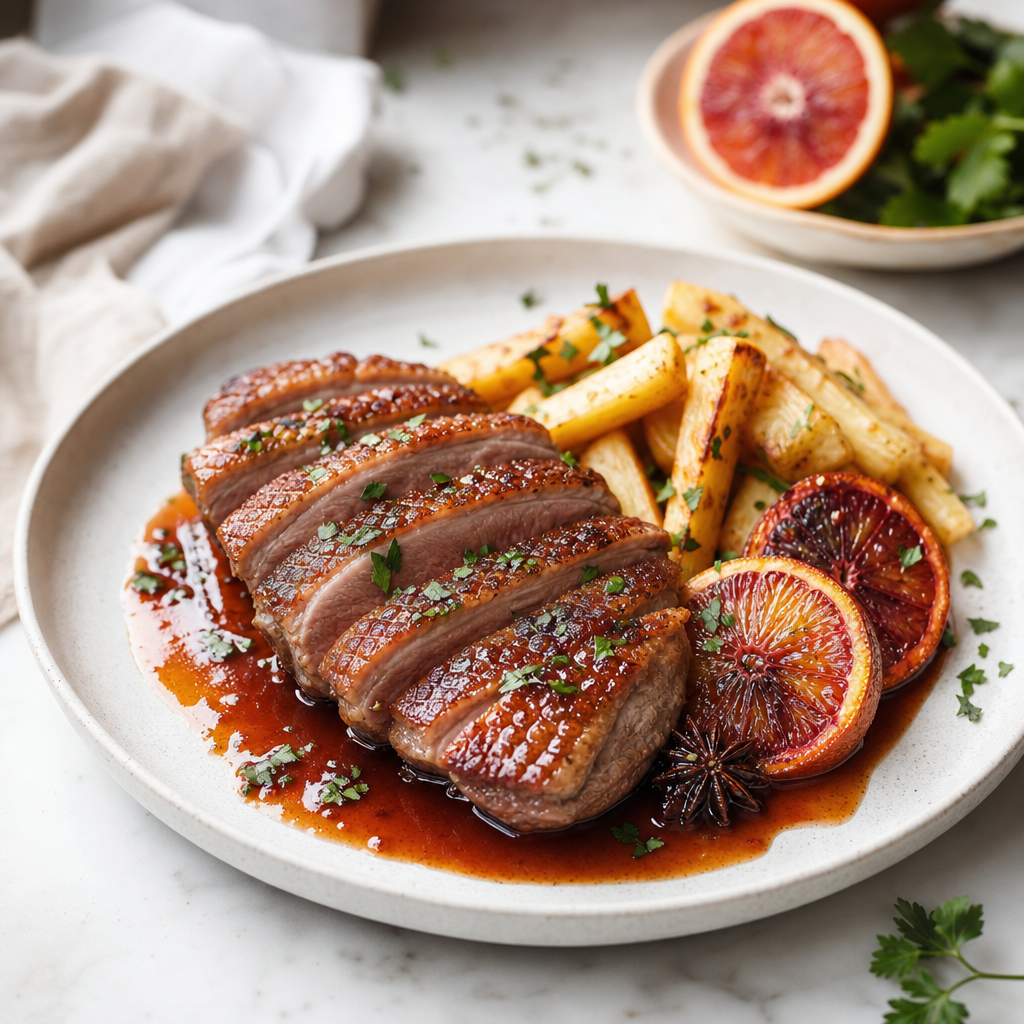
Seared Duck Breast with Blood Orange-Grand Marnier Sauce
Crisp skin gives way to tender, rosy duck that’s brightened by a glossy citrus and fortified spirit sauce. The sauce balances sweet, tart and warm notes — blood orange and orange liqueur lift the rich duck juices while a touch of honey deepens the glaze. Roasted parsnips add caramelized sweetness and an autumnal texture contrast.
If blood oranges are scarce, replace them with a mix of navel orange and a splash of fresh lemon for brightness; Grand Marnier can be swapped for Cointreau or an extra tablespoon of orange juice if you prefer no alcohol. Use a heavy skillet (cast iron or stainless steel) for the best skin sear and a fine-mesh strainer for a silky sauce. For make-ahead ease, roast the parsnips earlier and rewarm in a hot oven while finishing the duck.
Serve this dish for holiday dinner, small dinner parties, or a special weekend meal in December when citrus is at its peak. Pair it with buttered egg noodles or creamy mashed potatoes and a winter green salad. Leftover sauce keeps 3 days refrigerated and reheats gently — spoon over roasted winter vegetables the next day.
How to Make It
-
1
Preheat the oven to 200°C (400°F). Toss parsnip sticks with 1 tbsp olive oil and 1/2 tsp salt on a rimmed baking sheet; spread in a single layer and roast until golden and tender, 25–30 minutes, turning once.
-
2
Score the duck breast skin in a crosshatch pattern (skin only) and pat dry with paper towels. Season both sides with 1 tsp salt and 1/2 tsp black pepper.
-
3
Heat a large heavy skillet (cast iron preferred) over medium-high heat. Place duck breasts skin-side down without oil; cook, pressing lightly with a spatula for even contact, until the skin is deeply browned and most fat has rendered, 8–10 minutes.
-
4
Flip the duck breasts and sear on the flesh side 2 minutes. Transfer the skillet to the oven and roast until the internal temperature reaches 58–60°C (136–140°F) for medium-rare, about 6–8 minutes (adjust for thickness). Transfer duck to a cutting board and rest 8–10 minutes; reserve the pan and any fat.
-
5
Pour off all but 1 tbsp duck fat from the skillet and return to medium heat. Add the shallot and cook until softened, about 1 minute. Add the juice from the blood oranges and orange juice, scraping any browned bits from the pan.
-
6
Add the Grand Marnier and carefully flambé if desired and safe (or skip flambé). Stir in chicken stock, star anise, honey, and the remaining 1 tbsp olive oil. Simmer until slightly reduced and syrupy, about 6–8 minutes.
-
7
Remove the star anise and strain the sauce through a fine-mesh sieve into a small saucepan. Whisk in cold butter 1 tbsp at a time off heat to finish the sauce and season with remaining 1/2 tsp salt and additional pepper if needed.
-
8
Slice duck breasts thinly across the grain. Arrange sliced duck on plates with roasted parsnips. Spoon warm blood orange sauce over the duck and sprinkle with chopped parsley before serving.
Still hungry? Try one of these
Spaghetti Aglio e Olio with Roasted Cherry Tomatoes
A simple Italian pasta dish with garlic, olive oil, and sweet roasted cherry tomatoes.