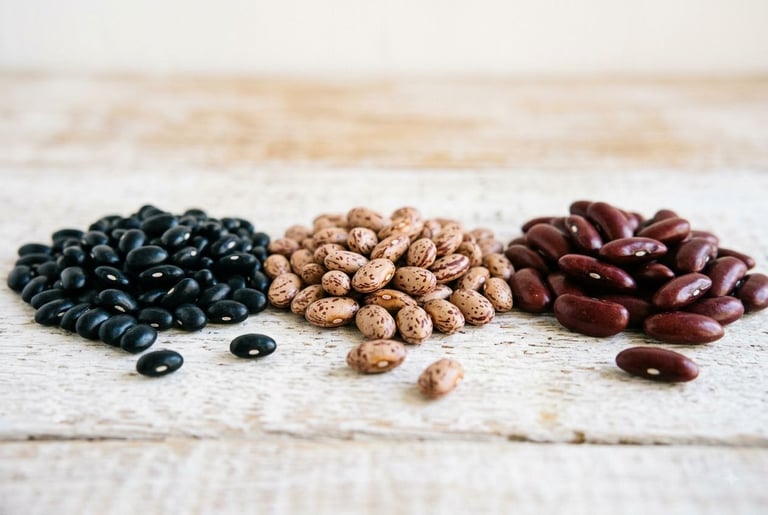
Kidney beans are the stubborn ones. Simmer them in chili for an hour and they still look like kidney beans, while a pot of pintos cooked the same way will have half dissolved into the broth. Black beans hold too, and dye the whole pot dark on their way. All three come from the same plant, Phaseolus vulgaris, and what separates them at the stove is the seed coat wrapped around each one, which behaves less like packaging and more like a valve controlling how much starch gets out.
Why the skin decides what happens in the pot
Every bean is starch and protein wrapped in a seed coat, and that coat decides how much of the interior ever reaches the cooking liquid. Kidney beans wear a thick, tough coat that holds together through a long simmer, so the beans stay whole and the broth around them stays relatively clear. Pinto beans wear a thinner one that gives way early, so starch leaches out as they cook and the liquid around them thickens into something close to a gravy on its own. Black beans keep their shape almost as well as kidney beans do.
Which makes the dark pot they leave behind a separate thing entirely, and it is worth not confusing the two. That color is pigment, not starch. A black bean's coat is loaded with anthocyanins — the same family of compound that colors blueberries and red cabbage — and they are water-soluble, so they bleed into the liquid well before any bean has started to break down. A pot of black beans goes dark within minutes of coming up to heat. It thickens hours later, if at all.
Pinto beans carry their pigment in the coat as well, and it runs the other direction. A raw pinto is beige with reddish-brown flecks, and that speckling sits in the skin rather than the flesh underneath. Once the skin softens and the pigment disperses, the flecks blend into a single pale brown — which is why a can of cooked pintos looks nothing like the dried bean the name describes.
Black beans, pinto beans, and kidney beans, side by side
| Black beans | Pinto beans | Kidney beans | |
|---|---|---|---|
| Skin | Tough, heavily pigmented | Thin, gives way early | Thick, tough |
| Texture after a long simmer | Holds shape, softens slightly | Breaks down, goes creamy | Holds shape well |
| Effect on the pot liquid | Stains it dark early, thickens it a little | Thickens into a gravy | Stays relatively clear |
| Best for | Soups, rice dishes, chili with a darker broth | Refried beans, thick soups, mashing | Chili, salads, anywhere the beans need to stay whole |
Which one to reach for
Reach for pinto beans when the dish wants body. Refried beans lean on that early breakdown, mashing what's already halfway there, and a pot of pinto-based soup thickens itself without a roux. Reach for kidney beans when the beans themselves are the point — in a salad, or a chili where you want to bite into a whole bean rather than a mash. Canned kidney beans are already fully cooked and safe to eat straight from the can; the raw bean's toxin, and the hard boil that neutralizes it, is a dried-bean problem that a commercial canning process has already handled. Black beans do both jobs: sturdy enough for a salad, and happy to be partially mashed into a chili or a pot of rice and beans to thicken the liquid without losing every bean to it. Reach for them when you want the pot itself to look dark.