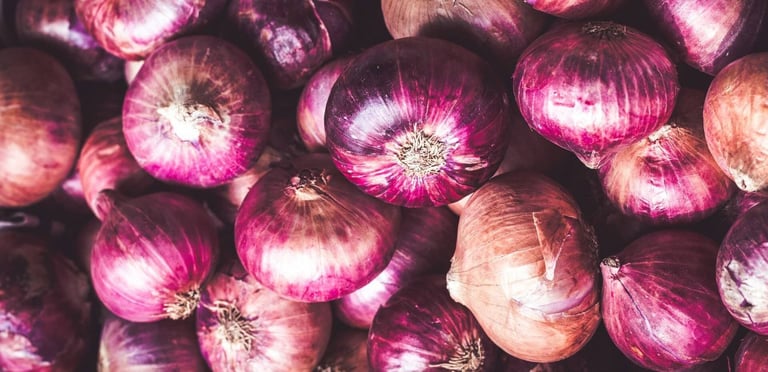
The refrigerator is the wrong place for an onion right up until the moment you cut it, at which point it's the only place. Whole and dry, an onion keeps for weeks in a cool, ventilated spot with no plastic anywhere near it. Sliced open, that same onion is only good for a matter of days — but only in the fridge, sealed.
Why the fridge ruins a whole onion
An onion is cured after harvest until the outer layers turn dry and papery. That skin is a moisture barrier, not a seal — it slows water loss, it doesn't stop it. A refrigerator's crisper drawer stays humid on purpose, to keep lettuce from wilting. Humidity is exactly what a stored onion doesn't want. It collects against the skin, soaks into the outer layers, and gives mold somewhere to start.
Pull a cold onion back into a warm kitchen and it sweats, the same way a glass of iced tea does — more moisture, right where the rot begins. A plastic bag does the same damage a crisper drawer does: moisture held against the skin, with nowhere to go. A mesh bag, a wire basket, an open bowl — anything that lets air move around the bulb — solves the problem by removing the thing rot needs.
Once it's cut, everything reverses
Slicing an onion tears open cells that were sealed until that moment, releasing sulfur compounds and moisture together. That cut face is now the fastest way for both to escape, and for bacteria to get in. The calculus flips: cold, the enemy of the whole bulb, becomes the only thing slowing the cut one down.
Store it in a sealed container or a tight wrap, not left open on a cutting board. The exposed layers dry out fast and pick up whatever else is in the fridge along the way.
Sprouting isn't the same as spoiling
A sprouted onion is not a spoiled one. Warmth and time pull the bulb out of dormancy, the same way they would a bag of seed potatoes, and it starts feeding a green shoot with sugar stored in its own layers. That shoot tastes bitter. Cut it out, and the rest of the onion — assuming it's still firm — is fine to cook with. What you're eating around is missed timing, not decay.
Rot looks and smells different. The outer layers turn slick, the bulb gives all over instead of just at the top, and it smells sour or sulfurous in a way a fresh onion never does. That one goes in the trash, not the pan. If what you're looking at is mold rather than plain softness, throw out the whole bulb rather than cutting around the spot — onion layers sit close enough that mold spreads along the surfaces between them, well past whatever you can see from outside.
How long onions actually keep
| Form | Where | How long |
|---|---|---|
| Whole, cured (yellow, white, red) | Cool, dry, ventilated — no plastic | 4 to 6 weeks |
| Whole, thin-skinned sweet onion | Same, or the fridge | 2 to 3 weeks |
| Cut or peeled | Fridge, sealed | 7 to 10 days |
| Chopped, for later | Freezer, sealed | 3 to 6 months, for cooking only |
Thin-skinned sweet onions carry more water behind a weaker version of that same papery barrier, so they can't outlast a standard yellow onion no matter where you put them.