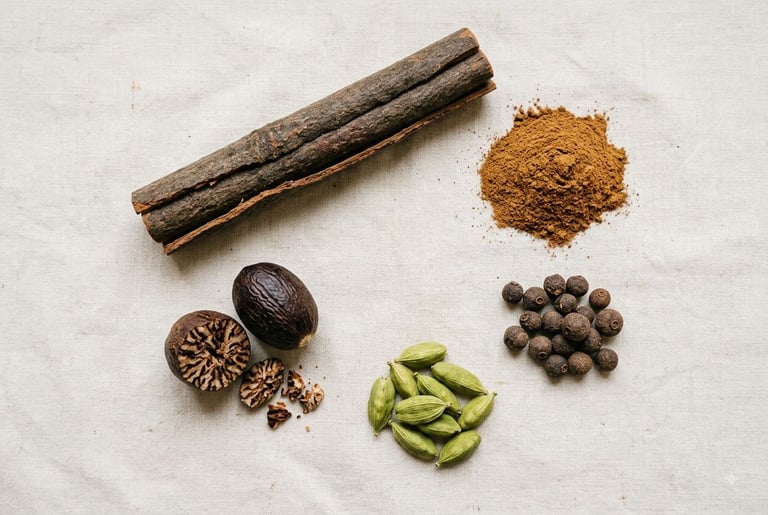
Nutmeg gets closest for warmth, at about three-quarters of a teaspoon for every teaspoon of cinnamon called for. Allspice works too, and reads even closer to cinnamon because of a shared aromatic compound. Neither one holds up in a cinnamon roll or a snickerdoodle, where cinnamon isn't a background note — it's the only note.
Why nothing tastes quite like cinnamon
Cinnamon's flavor comes from cinnamaldehyde, an oil concentrated in the bark, and almost nothing else smells like it. What's sold as ground cinnamon in an American grocery aisle is nearly always cassia — a thicker, more pungent bark than true Ceylon cinnamon, which comes from a different tree entirely and tastes softer and sweeter by comparison. Cassia also carries far more coumarin, which is the reason some cooks specifically seek out Ceylon rather than the default jar. Swap one for the other and the dish doesn't change character, just intensity: Ceylon needs roughly double the amount to match cassia's punch.
Nutmeg, allspice, and cardamom don't share that compound at all. Nutmeg's warmth comes from myristicin, allspice's from eugenol — the same compound that makes cloves taste like cloves — and cardamom's from cineole, a cooler, more floral oil. Each one reads as "warm baking spice" in isolation, which is close enough to fool a dish where cinnamon was only ever one voice in a chorus. None of them produce cinnamaldehyde, so none of them can actually taste like cinnamon on their own.
What each substitute actually gives you
| Substitute | Ratio | What it's missing |
|---|---|---|
| Nutmeg | 3/4 tsp per 1 tsp cinnamon | No cinnamaldehyde — leans piney and slightly bitter instead of sweet-warm |
| Allspice | 3/4 tsp per 1 tsp cinnamon | Carries clove and nutmeg along with it, which reads as pumpkin-pie-spice rather than plain cinnamon |
| Cardamom | 1/2 tsp per 1 tsp cinnamon | Floral and citrusy rather than woody — a different spice standing in, not a match |
| Ceylon (if the recipe was built for cassia) | 2 tsp per 1 tsp cassia | Same compound, much less of it — the flavor is right, just faint |
Where the swap actually fails
A spice cake, a curry, mulled wine, a pot of chili — anywhere cinnamon already shares the pot with cumin, ginger, cloves, or cardamom — can absorb a substitute without anyone noticing. The dish was never asking one spice to carry the whole flavor, so nutmeg or allspice just shifts the blend slightly instead of breaking it.
A cinnamon roll asks for the opposite. The filling is butter, sugar, and cinnamon, and cinnamon is doing all the work by itself. Swap in nutmeg and the roll tastes like a nutmeg roll, faintly bitter and closer to eggnog than to a bakery case. The same goes for snickerdoodles, cinnamon toast, and horchata, where the cinnamon flavor is the entire reason the dish exists rather than one line in a longer ingredient list.