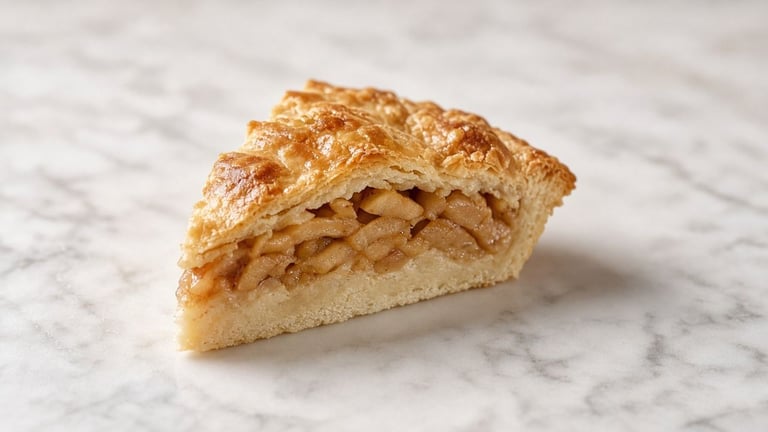
Usually you can save it, as long as the pie is fruit or savory and the bottom is damp rather than raw. Put it back on a preheated stone, steel, or heavy sheet at 425°F (220°C) for 10 to 15 minutes. A custard that has set over a wet crust is the exception: nothing reaches that crust fast enough to dry it, and the honest repair is to crisp slices one at a time and fix the next bake.
Look at the bottom before you pick a fix
Lift an edge or cut a wedge and look at the underside of the crust, not just the top of the filling.
| What you see | What happened | Can it be saved? |
|---|---|---|
| Pale, damp, soft, but cooked all the way through | Baked through wet, never dried out | Yes, 10 to 15 minutes on a hot surface |
| Gray or raw-looking paste against the filling | Liquid soaked the dough before it set | Partly. The outside will brown, the inner layer stays gummy |
| Crisp edges, soft pale floor, custard set on top | Custard was poured over unbaked dough | Not in place. Crisp slices separately |
| Crust fine, filling swimming in juice | Filling never thickened | The crust can be rescued, the juice is a next-time fix |
What is going on under the filling
Pie dough is flour coated in fat. It stays tender because the fat keeps the flour from linking up, and it turns crisp only when the water in it has been driven off and the starch and proteins have set. Pie Dough vs Biscuit Dough covers why the fat does that. What matters here is the timing.
A bottom crust gets hit from two sides. Filling liquid soaks in from above while the oven tries to dry it from below, and a wet crust cannot get hotter than the boiling point of water, 212°F (100°C). Browning needs a dry surface well above that. So a soaked crust sits at 212°F, steaming, and the steam has nowhere to go because the filling sits on top of it. It comes out pale and soft however long you leave it.
The bottom also gets the least heat of anything in the pie. A home oven heats the air and the top of the pie first. A thick glass or ceramic dish, or a pie tin sitting on a thin sheet pan on a middle rack, hands heat up to the dough slowly. The crust has to set faster than the filling can soak it, and in a cold, thick pan on a middle rack it doesn't.
Three things decide the race, and each one is something you control: how wet the filling is when it goes in, how hot the bottom of the pan gets, and whether the crust got a head start.
Recrisping a baked pie
Fruit or savory pie, whole. Set the oven to 425°F (220°C) with a baking stone or steel on the lowest rack for at least 30 minutes. If you have neither, preheat a heavy sheet pan upside down. Slide the pie onto it and bake 10 to 15 minutes. Tent the top with foil if it is already deep brown. A metal pie pan will pass heat up faster than glass, and if yours is glass, give it the full 15.
Slices. Reheat on a rack set over a sheet pan at 375°F (190°C) for 8 to 10 minutes, or crust-side down in a dry skillet over medium heat for 4 to 5 minutes with the lid off. The rack matters. Air under the slice lets steam leave instead of re-soaking the crust.
Custard or quiche. Whole, don't bother. The set custard seals the wet layer against the crust, and heat from below has to cross a pan and then the crust before it dries anything. Slice it, and crisp each slice on a rack at 350°F (175°C) for 8 to 10 minutes, then check that the center is hot. The crust will improve. It will not be what a blind-baked one is.
Not recoverable: a crust that is raw dough all the way across under a fruit filling. It can brown, and it will still read as gummy. Next time, with a head start.
What to change next time
Blind bake for any wet filling that is not baked as long as the crust. Custards, quiche, cream pies, and pumpkin all set at roughly the time a raw crust needs to dry, and the crust loses. Line the chilled shell with parchment, fill with pie weights, dried beans, or uncooked rice, and bake at 400°F (200°C) for about 15 minutes. Lift out the weights and bake 5 to 8 minutes more, until the floor looks dry and pale gold. For a custard, brush the hot crust with a thin coat of beaten egg and bake 2 minutes to seal it before filling.
Dock only what you will bake empty. Pricking the floor with a fork lets steam out so the dough doesn't balloon. With weights in, it is optional. For a crust you will fill raw, don't, since a custard leaks through the holes and glues the crust to the pan.
Double-crust fruit pies skip the blind bake. Fruit stays in the oven for 50 to 70 minutes, long enough to cook the dough through. Start at 425°F (220°C) on the lowest rack for the first 20 minutes, then drop to 375°F (190°C) until the juices bubble thick through the vents.
Thicken the filling, and let it get hot enough to work. Cornstarch, tapioca, and flour thicken only once the filling comes to a full bubble, which is why thick bubbles at the vents are the doneness test and the crust color is not. Roughly 2 to 3 tablespoons of cornstarch per 5 to 6 cups of fruit. For very juicy fruit, toss it with the sugar for 30 to 60 minutes first, drain the liquid, simmer it down by half, and pour it back.
Give the bottom heat. Use the lowest rack. Bake on a preheated stone, steel, or inverted heavy sheet. Use a metal or dark pan if you have one. Glass is fine and lets you see the underside, but it needs the extra heat from below.
Keep the dough cold until it goes in the oven. Butter that melts before baking leaks into the flour and the crust gets greasy rather than flaky, and a greasy floor browns less well. Chill the lined pan for 30 minutes before baking.
Cool a cooked filling a little. Hot filling poured into a raw bottom crust starts melting the butter before the oven does, and the steam it gives off goes straight into the dough. Let a cooked filling cool for about 5 minutes, the way this site's chicken and leek pie does, or longer when the crust is the point.